Occasionally I like to make a so-called fusion dish, for
example, topping pizza with Pad Ga-Prao Gai (Pad Ga-Prao with Chicken), my
husband loves this mixed version pizza.
I have had some pies with many different kinds and flavours
of fillings before but not a Thai flavour one…in fact you could make any kind
of pie filling..why not the one with a Thai flavour so here I came up the idea
of making a pie with Thai Yellow curry filling.
Ingredients
1 large or 2 small Chicken breasts (boneless and skinless)
cut into small chunks
1 large Potato, cut into small chunks
1 medium Cooking onion, cut into small chunks
1 small Zucchini, cut into small chunks
½ can (4 oz./can) Yellow curry paste (it’s adjustable, if
you want stronger or less flavour or taste)
1 tbsp Potato or Corn starch
¼ - ½ tsp salt or fish sauce (it’s adjustable, depending on
how much the curry paste you use the curry paste has sodium there)
½ tsp Sugar or palm sugar
1 tbsp Vegetable oil
1 - 1 ½ cup Coconut milk or 18 % table cream
2 cup Chicken stock (it could be more or less)
Instruction
Place
a medium size pot or the size you comfortable with for fitting all the
ingredients in, on a little bit higher than medium heat.
Add
oil until the oil is hot, add onion and curry paste, cook them until the
fragrant filled in the air. Add chicken and potato, and follow with
chicken stock (you don’t have to pour the chicken stock in all at once
because the pie filling should not be very wet so it’s better to put some
at a time when its simmering) and leave it simmer just before it’s
becoming tender add coconut milk or cream and zucchini, and cook until
potato tender.
Add
potato or corn starch (mix with 1 tbsp of chicken stock or cream) stir and
mix all ingredient well until all combined in a thick curry texture. Remove
from heat and set aside until it’s cool.
Ingredients for a 9” Pie Crust or 4 small pie crusts (make
small pies you need double batch)
2 cup All purpose flour
¾ cup Cold Butter, cut into chunks
1 tbsp Shortening
6 tbsp Cold water
½ tsp Salt (skip salt if you use salted butter)
1 egg yolk for making egg wash (mix with a little water)
Instruction
Preheat
oven to 425F or 220C
Mix
butter, shortening, salt and flour in a food processor.
Add
water a tbsp or two at a time until finish all and dough is formed.
Wrap
in plastic bag or sheet and set in the fridge for 1 hour or more you can
make the pie dough many days ahead store it in the fridge.
Divide
(with a knife) the dough into two if you make a 9” pie. Roll out and
flatten the dough larger than the pie pan. Place one in the pie pan.
Pour
the curry into pie shall. Cover with the top crust; trim top and bottom
edges, leaving a 1- inch overhang, seal to secure.
Brush
the egg wash on the pie.
Bake
in the preheat oven for 15 minutes and reduce the heat to 375F or 180C
cook for another 30 minutes or until brown.
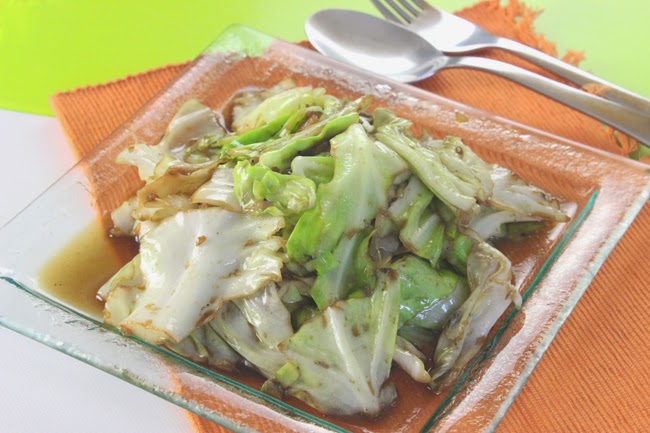
Stir-fried Cabbage with fish sauce or Ka Lam Plee Tod Nam
Pla (กะหล่ำปลีทอดน้ำปลา)
is a very popular vegetable dish in Thailand. I got this vegetable
recipe from Pantip.com. Pantip.com is a popular Thai language internet forum.
And also the recipe is widespread being shared on the Social Media.
Actually there are two versions of Stir-fried Cabbage with
fish sauce or Ka Lam Plee Tod Nam Pla (กะหล่ำปลีทอดน้ำปลา). The differences are the process – one: deep
fry cabbage before stir frying it with fish sauce and the other one: use small
amount of oil and use fish sauce to steam the cabbage on a hot steel wok. And
this recipe is the second one.
What is the secret turns this simple dish to be a popular
dish? There are two factors – first one: (to have) a good fish sauce, and second:
the steam and caramel from the fish sauce (see the instructions) that is
created from a hot wok to produce a good result.
* Use a steel wok only!
For 2 servings
Ingredients
400 g. Asian Cabbage
3 – 5 cloves Garlic, crush and chop roughly
2 tbsp Fish sauce
3 tbsp Vegetable oil
Instructions
Separate
each leaf and wash the cabbage in the cool tap water or if the cabbage is
not fresh then soak the leaves in cool water for a few hours or until the
leaves are crisp.
Drain
the cabbage leaves and cut or break into big pieces or 2.5 x 3 inches.
Heat the wok over high heat, and add oil
and follow with garlic.
Leave
the garlic in hot oil for a second and follow with the cabbage, and leave
the cabbage in the hot wok for 20 – 30 seconds or count 1 – 10.
Stir
and toss and mix the cabbage with oil and garlic well and pile the cabbage
in the middle of the wok.
Pour
fish sauce on the wok around the cabbage. Let the fish sauce
creates steam on the hot wok so that fish sauce steam will cover and cook
the cabbage. Leave it for 20 second or count 1 – 10.
Stir
and toss and mix the cabbage with fish sauce caramel that burned on the
wok totally for 20 second or count 1 – 10.
Remove
from heat and transfer the cabbage to a serving plate. Serve hot with steamed
Jasmine rice.
There is a recipe for Panang curry on my blog here (the
link) that one is simply served the curry with steamed rice and for this one I
want the same curry have a different look in a nice style and also the texture
is different too because of noodles.
The process is pretty easy even people who don’t know how to
cook Thai food or think that cooking Thai food is so complicated, and also I
have a video to show you how to make this dish (please see the video link
below). Hope that also help to see a whole process.
Ingredients
4 Large chicken breasts, cut into chunks
1 can Thick coconut milk (560ml.)
3 cloves Garlic, finely chopped
1tsp Sugar
1 tbsp Vegetable oil
1 tsp Soy sauce
1 Cucumber, cut into small pieces (see video)
10 Kaffir lime leaves, cut into very thin and narrow strips
320-375g. Vermicelli rice noodles
1 – 1 ¼ tbsp Salt
3 litre Water
Instructions from video
Instructions
Cut
a chicken breast lengthwise into three pieces and from each piece cut
diagonally into ½ inch thick, and continue until finish all. Add chicken
with chopped garlic, soy sauce and sugar, and mix well.
Heat
a pot on a little bit more than medium high heat, and add oil and curry
paste. Stir and cook curry paste until you smell the aroma from curry
paste, and add chicken. Stir and mix chicken well with curry paste, add
coconut milk. Cook until the mixture is boiled and bubbling, and turn the
heat down to medium and simmer for (about) 20 minutes or until chicken is
tender. Remove from heat.
* Use the pot is just big enough to contain the amount of
chicken and coconut milk and cook on the small stove top. A large pot on the
large stove top with the heat mentioned above, the liquid in the curry will be
dry out before the chicken becomes tender. If this happened you can simply add
some water into the curry.
Bring
water to a rapid boil, and add salt. Add vermicelli rice noodles and cook
for 2-3 minutes or until tender. Drain well. Roll noodles into a bundle with
a fork for the size of a serving, until finish all about 35 – 40 bundles.
Garnish
noodles with lemongrass and Kaffir lime leaves.
To
serve, place a bundle of noodles on your own plate pour on chickened Panang curry and serve with cucumber cubes as a side dish.
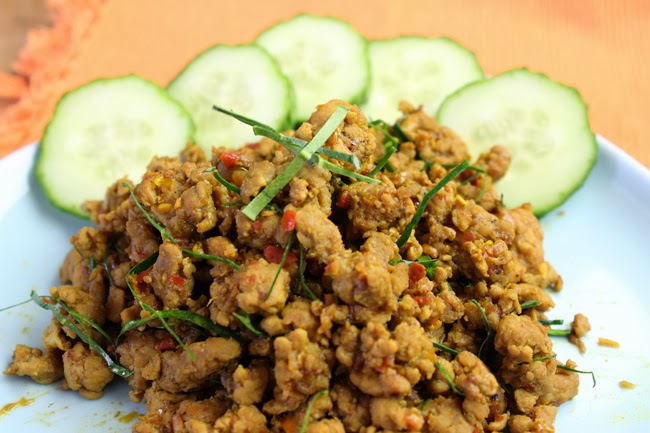
Khua Kling, literally dry frying (“Khua” means the kind of
cooking process with little water or no water at all and cook until the food is
very dry, for “Kling” means tossing or rolling, and for “Moo” means pork), is
one of well known southern Thai dishes.
Southern Thai food is significantly different than the food
from the other parts of Thailand
as Southern Thai food got a lot influence from Indian, Arab and Persian
cuisine. Turmeric is an important ingredient and plays a big part in Southern
Thai food.
In general Southern Thai food is very spicy it can be
burning hot so when you go to a restaurant in Southern
Thailand, they always give you a basket or big plate of fresh
vegetables covering with ice. These vegetables help to reduce feeling burning
hot your tongue.
For this recipe it is not that spicy compares with Khua
Kling in Southern Thailand but the flavor is
still real Southern Thai food. You can use other kinds of meat like chicken,
beef or fish but if you use fish then you should reduce ½ cup of water to be 1 –
2 tbsp of water and the cooking time should be reduced too so that fish will
not be over cooked.
**** Very spicy
Ingredients
500g. Minced pork loin
3 tbsp Thai southern style curry paste (see recipe below)
½ cup Water
2 tbsp Fish sauce (adjustable, each brand of fish sauce has different level of sodium)
2 tbsp Vegetable Oil
1 ½ tsp Palm sugar
5 Kaffir Lime leaves, cut into very thin stripes
Instructions on video
Instructions
Heat
the wok over medium high heat, add vegetable oil and following with minced
pork. Cook until pork turns prink and add curry paste, fish sauce, and
palm sugar, and mix well.
Lower
the heat to medium, add water and cook until pork is tender and dry.
Turn
of the heat, add Kaffir lime leaves and mix well
Serve
with lots of fresh vegetables like cucumber, lettuce, snake beans etc, and
steamed Jasmine rice.
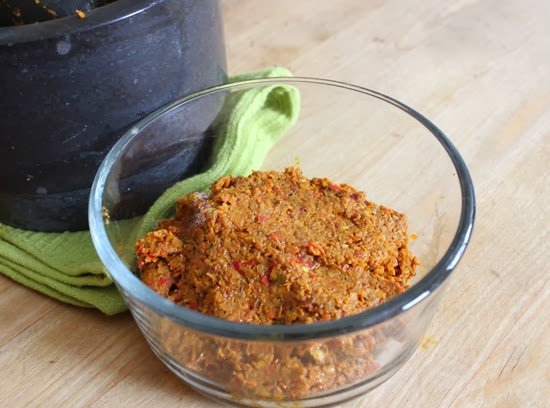
Thai Southern Style Curry Paste
Instructions on video
Ingredients
12 Dried Thai chilies or dried Prik Kee Noo
6 Fresh Thai chilies or fresh Prik Kee Noo, chopped
3 cloves Garlic, chopped
2 Shallots, chopped
1 ½ tbsp Chopped turmeric (about 2 inches long of turmeric)
2 tbsp Galangal, finely chopped
2 tbsp Lemongrass, finely chopped
1 tbsp Fresh ground pepper
1 ½ - 2 tsp Shrimp paste
¼ tsp Salt
Instructions
Soak
dried chilies in a bowl of boiling or hot water until soft 15 minutes to
30 minutes depends on the temperature of water – hotter water takes less
time. Rinse and remove the seeds, and finely chop.
Wrap
shrimp paste with a piece of tin foil and roast on the cook top of a stove
until smelling the air with an aroma.
Put
all the ingredients in the mortar, and pound and crush with the pestle
until smooth. It can be done with a food processor also. (Store in the freezer if you don't use all at once).
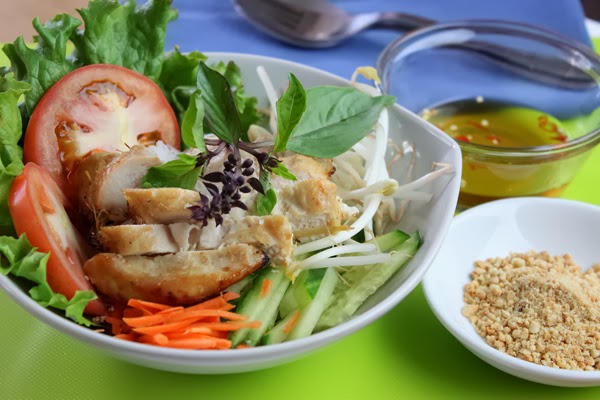
This noodle dish is considered a healthy food as more than
half of the dish is fresh vegetables, basically it is a salad dish and we have
a bundle of noodles and grilled chicken to complete a one dish meal food.
This dish can be lunch or supper and the process is pretty
straight forward. You can find all the ingredients at Asian grocery stores.
For 3 servings
Ingredients
2 Chicken breast
1 Lemongrass, cut and crushed
2 tbsp Vegetable oil
11⁄2 tbsp Soy sauce
1 tbsp Oyster sauce
1 tbsp Honey or sugar
½ tsp Ground pepper
1⁄6 tsp Salt
-------------
150 – 200 g. Rice Vermicelli
1 cup Bean sprouts
1 cup Cucumber, shredded
¾ cup Carrot, shredded
6 slices Tomato
3 pieces Lettuce
3 branches Thai basil
¾ cup Ground peanut
1 tsp Salt
2 tbsp Vegetable oil
Salad dressing
2 cakes Palm sugar(see picture at Herbs page)
5 tbsp Water
2 Fresh Thai chilies, chopped (adjustable)
2 ½ tbsp Lime juice (adjustable)
2 ½ tbsp Fish sauce (adjustable, each brand of fish sauce has
different level of sodium)
You can also follow the instructions from the video.
Instructions
Cut
lemongrass into small pieces, and crush it with a mortar and pestle for
4-5 minutes or until soft and wet.
Marinate
Chicken with crushed lemongrass, veg. oil, soy sauce, oyster sauce, honey
or sugar, ground pepper and salt for a few hours or leave it in the fridge
over night if you prepare it the night before.
Making
salad dressing, place a small pot on medium heat, and add palm sugar
and water. Cook palm sugar until it is melted and let it sit for a minute
after bubbling, and remove from heat. Let it cold. Add chopped chilli,
lime juice and fish sauce, and stir to mix.
Bring
a medium saucepan of water or just enough to cover rice vermicelli to boil
over medium heat. Add 1 tsp salt and rice vermicelli, and cook until
noodles are tender, about 3 minutes. Drain in a colander or strainer and
transfer to a bowl.
Grill
the chicken; remove lemongrass from chicken with a spoon or folk. You can
use oven grill or charcoal grill, grill two sides of chicken until it is
cooked. Cut into pieces the size you wish.
For
serving, place a bundle of noodles in an individual serving bowl and put a
piece of lettuce beside or under the noodles, and add and arrange tomato slices,
cucumber shredded, carrot shredded, bean sprouts and ground peanut nicely.
Garnish with Thai basil. Pour in the salad dressing when you are ready to eat.
These little spring rolls (cups) are healthy and nice
looking food. They are good for a party like cocktail party or the mood that
you want to make something special for yourself. The party season is coming so
I had this idea came up making something nice and healthy. It basically is a
bite salad.
This healthy dish can be served all seasons as all the
ingredients are available at the market. If you are allergic to seafood you can
simply change shrimp to be grilled breast chicken, and if you are vegetarian
you can just use grilled firm tofu sticks instead.
In this recipe, I use Thai brown rice vermicelli but if it is
not available in your area then you can just use ordinary one.
Ingredients
30 Shrimp, peeled and deveined (size 31 – 40)
1 tbsp Soy sauce
2 tbsp Water
1 tbsp Vegetable oil
150 g. Thai brown rice vermicelli or rice vermicelli
5 pieces Rice paper (for size 22 x 22 cm) or 7 pieces (size
15 x 15 cm.)
1 Green or red lettuce
1 Small carrot, cut into long thin sticks or julienne, 1 ½ -
1 ¾ inch long
1 Small cucumber, cut into less than ½ x 1 ½ - 1 ¾ inch long
(60 sticks)
60 leaves Mint
1 tsp Salt
Peanut Dipping Sauce (recipe follows)
Instructions
Bring
a medium pot of water to a boil over medium high heat. Add salt and
noodles, and cook until noodles are tender. Drain and transfer to a bowl.
Put aside.
Combine
shrimp, soy sauce and oil.
Place
a frying pan on medium high heat. Add shrimp and water, and cover the
frying pan with a lid while the shrimp is cooking, cook shrimp 1 minute each side until it is cooked or turn
pink. Remove from heat and transfer to a plate.
Dip
rice papers in room temperature water and cut into 1 ¼ inch strips with
scissors. And lay rice paper strips flat on wooded cutting board.
Cut
green lettuce leaf 1 ½ inch from the ruffly edge of lettuce leaf by 3
inches long. Place a small bundle of noodles on top of mint leaves, and
top with 2 cucumber sticks, 7 - 8 carrot sticks and shrimp. Roll lettuce around
it tightly and secure the roll by wrapping around with a rice paper strip.
Repeat with remaining ingredients. Serve
with peanut dipping sauce.
Peanut dipping sauce
1 cake Palm sugar (see the picture on "Herbs" page)
2 tbsp Water
½ cup Roasted unsalted peanuts, crushed
½ - 1 Fresh Thai chili or Prik Kee Noo, finely chopped
1 ½ tbsp Fresh coriander, finely chopped
1 ¾ tbsp Fish sauce (or soy sauce, if seafood is an issue)
1 ¾ tbsp Lime juice
Instructions
Place
palm sugar and water in a small pot over medium heat. And cook until palm
sugar dissolved, and remove from heat. Add fish sauce and lime juice, and
mix well.
Add
crushed peanut, chopped chili and chopped coriander, and mix well.
Pad Cha (literally, stir-frying with cha cha sound or
sizzling sound of burning food from the hot wok.) is a very popular stir-fried
spicy dish and commonly is seafood. Pad Cha dish has many different versions from
different kinds of seafood for example squid, fish, shrimp, crab and or clam.
Each kind of seafood may have slightly different flavors from different herbs
beside the kind of seafood itself.
This dish has a very nice and strong fragrance from herbs which is good as the herbs be able to cover the smell of seafood and
at the same time the aroma and nice flavor delight the palate.
This dish is not complicated to make, and it doesn't consume
a lot of time to make either, to create a nice real Thai meal at home.
*All the ingredients are available at Asian grocery stores.
For 2 servings
Ingredients
1 Fresh squid (about 400 –
420g.)
3 Fresh Thai chillies or Prik Kee Noo (adjustable)
3 cloves Garlic
½ cup Bai Ga Prao or Holy basil
¼ cup Fingerroot (about 3 - 4 roots), shredded or cut into
stripes
2 tbsps Young or green peppercorn
2 - 3 tbsps Vegetable oil
1 tbsp Fish sauce (adjustable)
1 tbsp Oyster sauce
2 - 3 tbsps Water
Garnish (optional)
¼ cup Bai Ga Prao or
Holy basil – for deep frying in oil until crisp.
You can also follow the instructions from the video.
Instructions
Cut
the squid tube in half lengthwise. Clean and remove the quills. Cut into
rectangle or square pieces and cut each piece a criss-cross pattern on the
inside of the squid.
Pound
fresh Thai chilli and garlic in mortar until break to be small pieces or
you can use a knife to chop chillies and garlic.
Place
the wok on medium heat with vegetable oil and swirl the oil to cover the
bottom of the wok.
Add
the mixture of chilli and garlic, stir-frying until its sends the
fragrance and then add squid and stir to mix well.
Add
fish sauce, oyster sauce, young pepper corn, fingerroot and stir to mix
well and add the water on the wok beside the food and so that water will
be hot before the water mix into food.
At last, add Bai Ga Prao or Holy basil
and mix into the mixture and stir until Holy basil wilt and remove from
heat.
Garnish
with crispy Bai Ga Prao. Serve hot with hot steamed Jasmine rice.